Why is the Round LED Display Transforming the Way We Express in Space?
(And why have I become so fascinated by it?)
It was in an insignificant bar project that I truly fell in love with the Round LED Display. That time, the budget for the space was limited, and the interior decoration had already been finalized. The owner merely wanted “to add a bit of visual interest”.
We installed a display with a diameter of over one meter, hanging above the bar counter, and only played simple rotating light effects. Unexpectedly, the result was as follows:
- Any passer-by would look up.
- Many people took out their phones to take pictures.
- Some stood beneath it to record short videos.
It’s not because of the particularly dazzling content or the particularly large screen. Rather, it itself is inherently attractive.
At that moment, I realized: The value of this display is not just about being “attractive” or “unique”, but it is a truly effective tool that changes the behavior of the space and increases the duration of attention.
Over the following years, I saw the same effect time and again in retail stores, airports, exhibitions, hotels, atriums of cities, and the storefronts of chain brands. The screen was:
- More noticeable than a rectangular display of the same size.
- Had a faster recognition speed.
- People’s eyes were more easily attracted and stayed for a longer time.
A Round LED Display is powerful.
Where Does the Appeal of This Display Come From?
Every day, we live in a world “surrounded” by rectangles: mobile phones, televisions, signs, shop windows, vending machines, advertising screens… Rectangles have become our default perception of “information media”.
But a Round LED Display is different. Humans have a greater concentration on circles. This is not a matter of superstition; it is an intuitive perception derived from the structure of vision.
1. Central Focus
The display is more likely to form a central focus. A rectangle is composed of edges. Visually, attention is constantly drawn away by the four corners. Attention needs to be guided by the content. It has no corners, no direction, and no edge pressure. The line of sight will naturally converge towards the center. Even if the content is just a simple rotation of light or pulse, the human eye will be captivated.
2. Gentle Integration
The screen is inherently “gentle” and is more capable of blending into the space. The rectangular display has a kind of “domination feeling”, which tends to make the space appear tense. This display can eliminate the sense of oppression and make the vision more gentle. Especially in commercial spaces, leisure spaces, and exhibition scenarios, it is often more friendly and has higher compatibility.
3. Elevated Importance
The display makes the content appear more “important”. Symbols, badges, seals, logos… Important information that holds meaning in human culture is often represented by circular shapes. This gives it a certain “ceremonial quality”. When content is displayed on this screen, the visual level will naturally be elevated.
4. Immersive Motion
Circular motion language is more likely to create a sense of immersion on this screen. Rotation, ripple, pulse, diffusion… These animations all have great expressiveness here. It possesses a kind of “rhythmicity” that makes people want to stop and watch.
You can immediately see that: The Round LED Display is not a shape; rather, it is a kind of media logic.
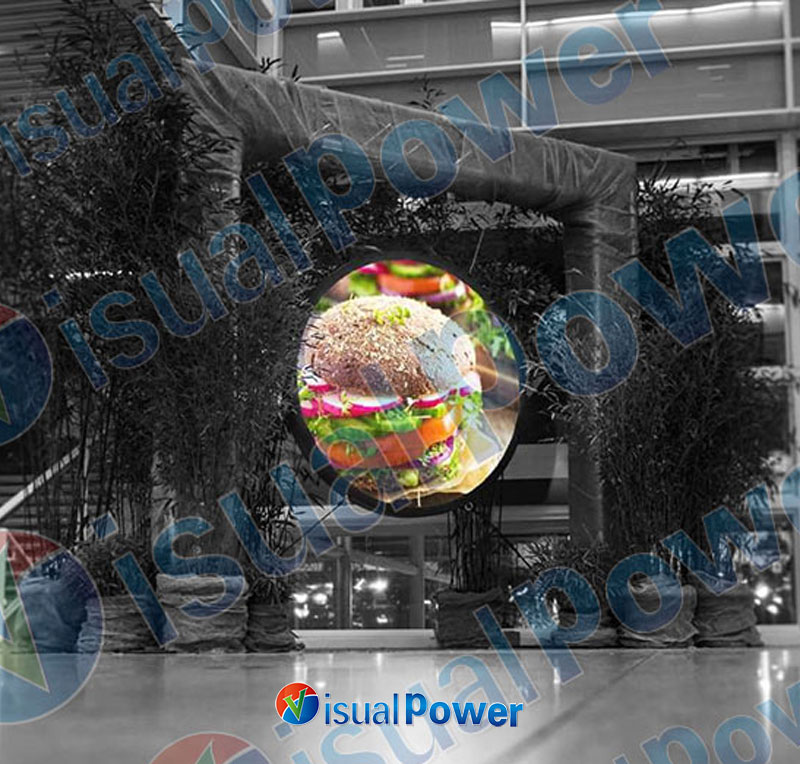
Why Are More Spaces Adopting Round LED Displays?
The following three scenarios best illustrate this trend:
1. High Foot Traffic Areas
City atriums, airport corridors, main aisles of shopping malls, entrance areas, transitional spaces… Users in these places never stop to read long texts. They only pause for a few seconds due to visual stimulation. This display has inherent advantages: It enables the viewer’s vision to focus on the center in an instant, completing the process of “grabbing attention → understanding → transformation”.
2. Visual Symbolic Expression
Traditional advertising screens focused on “information volume”. Nowadays, brands place greater emphasis on “visual symbols”, “atmosphere” and “cultural memory points”. This Round LED Display is particularly suitable for flywheel, pulse, aperture, deformation of the logo, rotating graphics… These styles can not only convey the brand’s language but also enhance the spatial tone.
3. Self-Propagation Capability
Modern space design has shifted from being merely “attractive” to “whether it can encourage users to take photos themselves”. The photo transmission ability of this display is much greater than that of rectangular screens. The reason is simple: It looks more “like a device”, making it easier to be used as footage. If you give a person a rectangular screen, he won’t want to take photos; but if you give him a Round LED Display, he will automatically start looking for angles. This is the value difference.
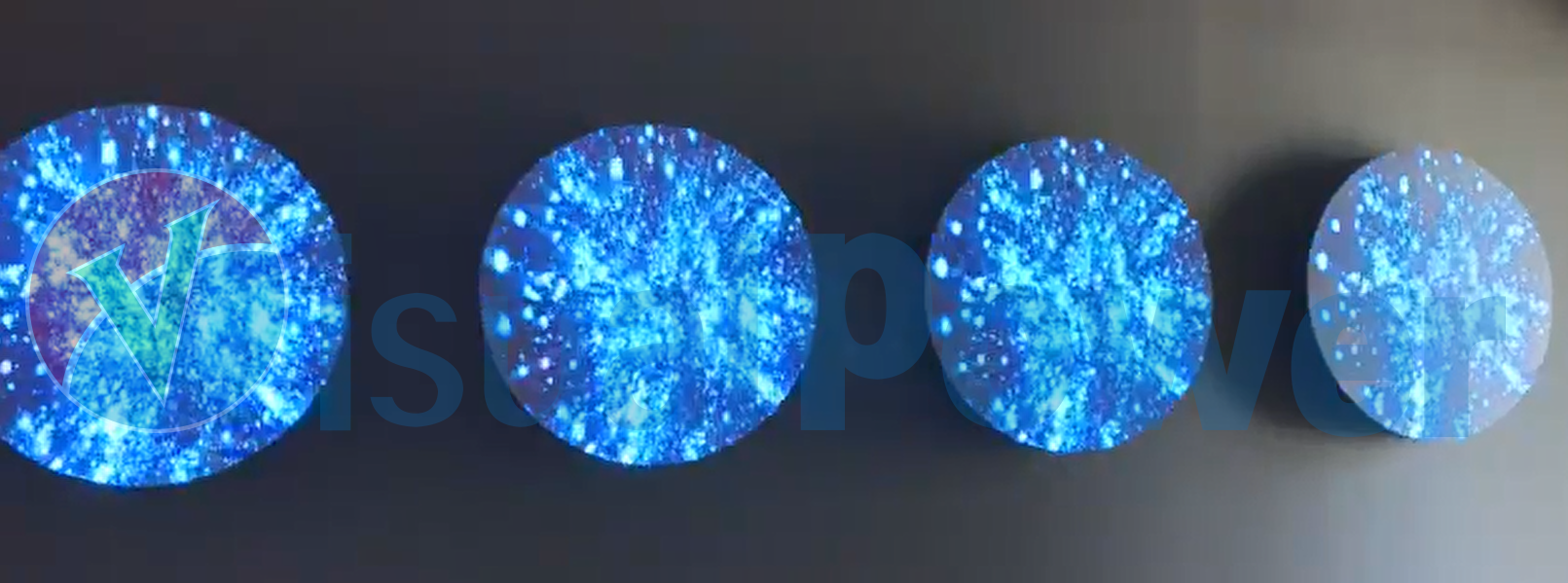
Mainstream Manufacturing Processes for Round LED Displays
Option A: Fan-shaped module
- Truly “perfect circle”
- Module made in fan shape, like pizza slices pieced together
- Features: Highest arc accuracy, best visual texture, strong stability
- Suitable for large-scale projects or spaces emphasizing brand image
- Cost: Highest
- Applicable: Flagship store, airport large display, art installation, immersive exhibition, high-budget commercial settings
Option B: Standard Group + Surrounding Area Coverage
- Most commonly adopted, easiest to implement
- Use regular groups to form approximate circle, edge masking for standard circle
- Slight geometric errors at edges when viewed closely
- Advantages: Reasonable cost, short delivery cycle, easy maintenance
- Application: Retail, small business settings, chain storefronts, bars, pop-up stores, event installations
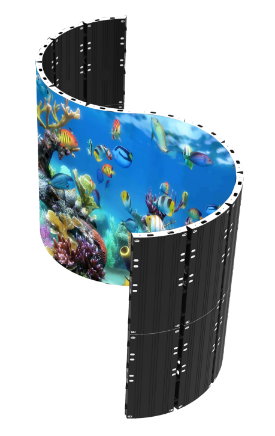
Option C: Flexible Module (Flex LED)
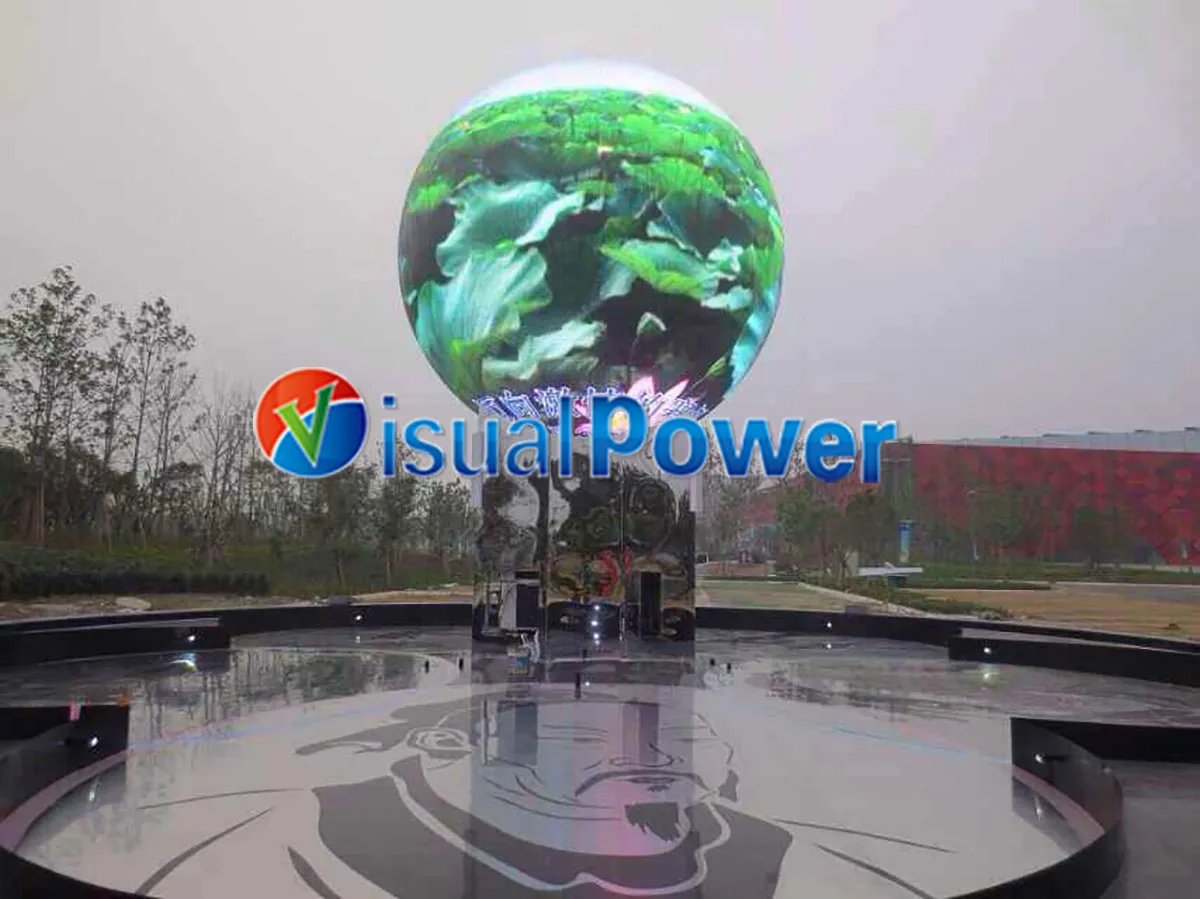
- Flexible, can form cylinders, hemispheres, spheres, waves, etc.
- Suitable for creative or large-scale experiential spaces
- Advantages: High design freedom, strong visual impact
- Requires advanced structure, heat dissipation, waterproof design
- Applicable: Science museums, airport atriums, large-scale exhibitions, themed settings, art installations
Key Points to Confirm Before Starting a Round LED Display Project
- Viewing distance → Choose P2/P2.5/P3/P4
- Lighting environment → Brightness settings differ
- Content type → Brand visual, animation loop, advertisement, artistic content, dynamic info
- Single or double-sided → Double-sided cost ~2.5× single
- Installation method → Lifting, embedding, erecting
- Maintenance and operation cost included?
- Supplier experience with display cases
- Maintenance design → Spare parts, assembly/disassembly ease
Content Principles for Round LED Displays
- Main visual element in center
- Animation loop: 12–20 seconds
- Avoid heavy text; low info density
- Focus on flow/atmosphere, not reading
- Moderate colors → avoid visual fatigue
Common Engineering Pitfalls
- Screw position → Display tilted after lift
- No vibration assessment → Air flow caused nodding
- Structural miscalculation → Hanger cost higher than display
- No content owner → Static image played
- Missing spare parts → One module broke → device shutdown
- Installation points unchecked → Temporary steel structure → Budget exceeded
Real Case: Bar Installation
- Round LED Display diameter: 1.2 meters
- Plan: Fan-shaped module → switched to standard module + edge coating due to budget
- Result:
- Visual effect exceeded expectations
- Budget controlled
- Installation shortened
- Photo sharing increased
- Atmosphere enhanced
Minor issues solved: Brightness, air flow, slight edge deformation
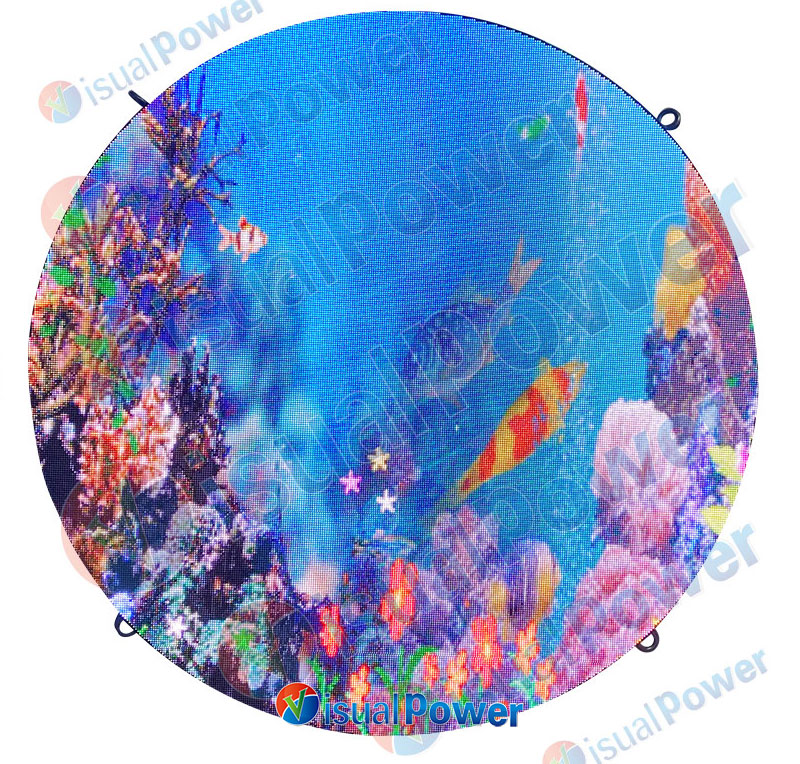
Summary: “The investment isn’t huge, but the returns are obvious.”
Price Range (Reference)
- Small: ≤$500
- Medium indoor: $1,000–$5,000
- Double-sided, outdoor, large-scale: Higher
Note: No need to blindly chase high prices; the key is choosing a plan that suits you.
What Has the Round LED Display Changed?
- Not the display method, but the narrative mode of space
- Effects:
- Higher attention acquisition efficiency
- Softer spatial experience
- Stronger visual symbols and communication capability
Conclusion: The Round LED Display is not a form of design, but a means to “enhance the value of space”.



 The LED Displays Everyone’s Asking About in 2026 (And Where They Work Best)
 Hexagon LED Display: How Geometric Screens Are Transforming Modern Exhibitions
 Difference of SMD GOB HOB COB LED display module
 Why Museums Are Turning to Fine Pitch LED Displays for Better Visitor Engagement
 Sphere LED Display Industry Truths: Cost, Content, and Design Risks Explained

 Sales Manager