Sometimes, the thinner something is, the more it can handle the situation – My story with the Ultra Slim LED Display
I’ve been in the exhibition design business for nearly two decades, starting from the days when I was hanging LCD splicing screens in exhibition halls. To be honest, before I first saw Visualpower’s ultra slim LED display, I always thought that “thin” was not a good thing. If it’s too thin, it’s not reliable, not durable, and difficult to maintain – you know, people like us who have done engineering work, deep down we still believe in something thicker and more stable.But that day, I had to eat my words.
It was in the exhibition hall of a tech company. I went there to check out other people’s solutions. When I entered, I didn’t pay much attention. When I reached the main display wall, I was about to walk around to look for the wiring, but then I realized… there was no such thing as “walking around”. The entire wall was as flat as a mirror, and the LED screen was embedded into the cement wall as if it were a part of it, shining and alive, but without any sense of being a “device”. At that moment, I was stunned. Can you imagine? An old-school engineer like me, looking at a screen and questioning his own existence.
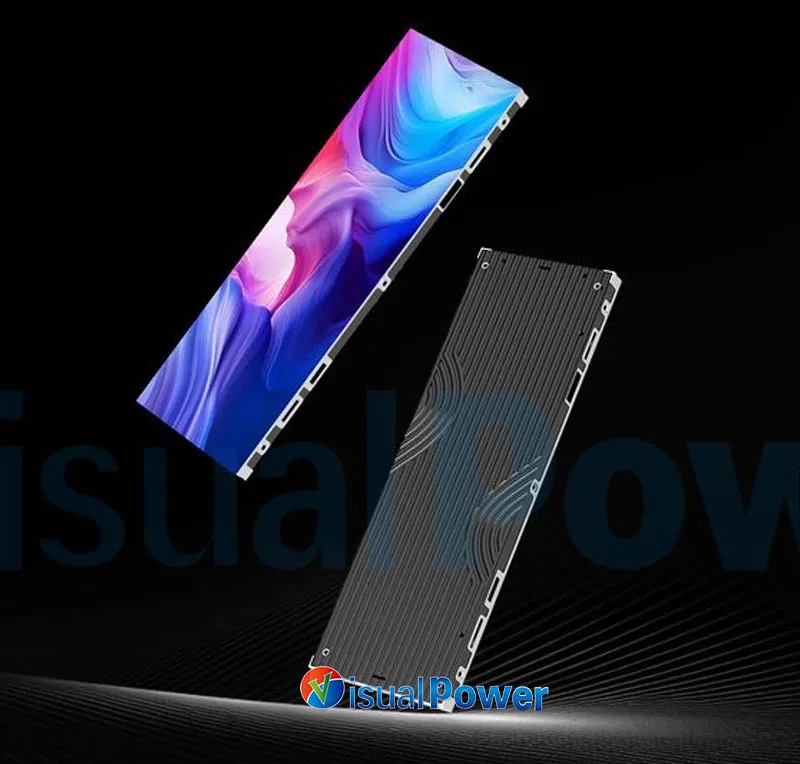
I leaned over and touched it. It was so thin that it sent a chill down my spine. It was even thinner than the tiles in my kitchen, with not even the head of a screw showing. The screen was on, playing a product video of theirs. With a dot pitch of P1.25, the clarity was comparable to a 4K TV, and even the tiny solder dots on the circuit board in the video were crystal clear.
When I began to question life
After I got back, I immediately started looking up information. The key words I used were “ultra slim LED display”. I wanted to know how on earth this thing was made. You know, I was a bit embarrassed, maybe even frustrated. In the past, for a 3-meter screen, we had to spend a long time on the steel structure, reserve maintenance access points, install cable trays, distribution boxes, and ventilation openings… Now, this thing just clicks right into place?
I thought about it for a week and finally decided to give it a try myself. I have a client who is setting up an AI exhibition hall. They said they wanted to create a “more advanced experience”. So I took a gamble and proposed an “ultra-thin wall-mounted LED” solution. They were skeptical, but I didn’t say much. I just brought them to see the screen that had knocked me out – the Visualpower V3 Pro.
On the day of installation, I knew I couldn’t go back
I was present throughout the installation site, and I personally drew the blueprints. I also customized the cavities and wiring channels in the walls in advance. You’d think installing ultra-slim LEDs would be tricky, but to be honest, it’s much easier than the traditional setup.
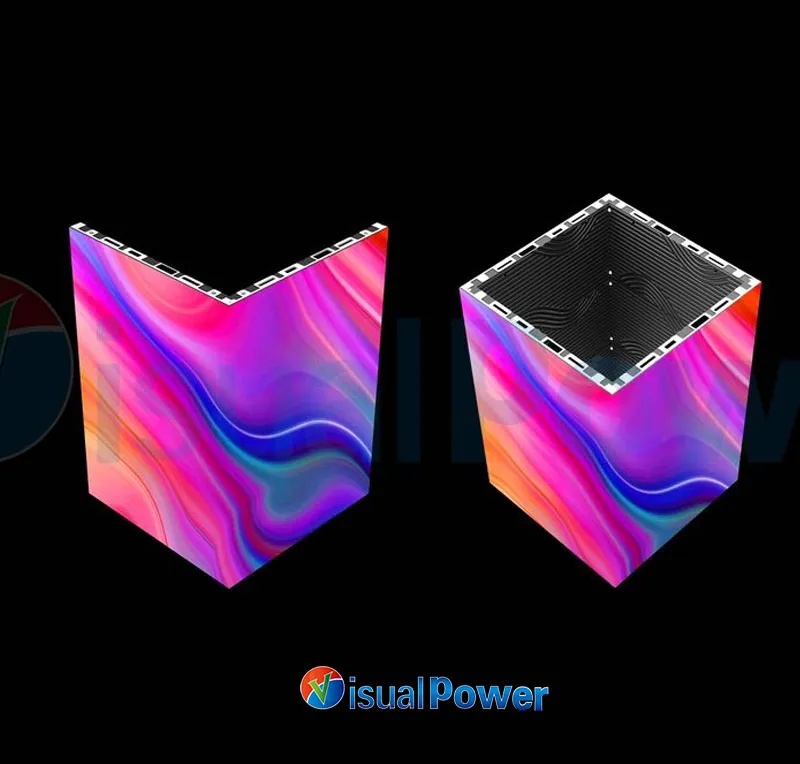
First, there’s the modular magnetic attachment structure – it’s simply amazing. Previously, a module had to be fastened with screws, but now two workers hold suction cups and with a “pop”, the module finds its position and attaches itself. The entire large screen is 3 meters high and 6 meters long, and it’s all done in just two hours.
Next comes the wiring. The V3 Pro adopts an integrated power supply + receiver card structure. All the wiring is completed within the wall. Front maintenance, hot swapping, and quick component replacement can all be done on the front side. There’s no need to leave a large back door for engineers to crawl in as before.
Most importantly, it’s that sense of “disappearing” presence. When the screen is off, it just sits there quietly, like part of the wall; when it’s turned on, it seems as if the entire space is lit up. Unlike those traditional screens that used to shout “I’m here, I’m here, I’m here”, which were just a big black board standing out awkwardly no matter how you looked at them.
From then on, I always ask myself one question
“Can this space accommodate this screen?”
Previously, I was concerned about content, budget and customer preferences. Now, I’m more thinking about: Will this screen disrupt the integrity of the space? Can it blend in with the architecture?
To put it more bluntly: I don’t want to do that kind of design that makes concessions to LEDs anymore.
The inspiration that V3 Pro, this ultra-slim LED, has brought to me is that it has turned the screen into a part of the spatial language, rather than a device stuffed in.
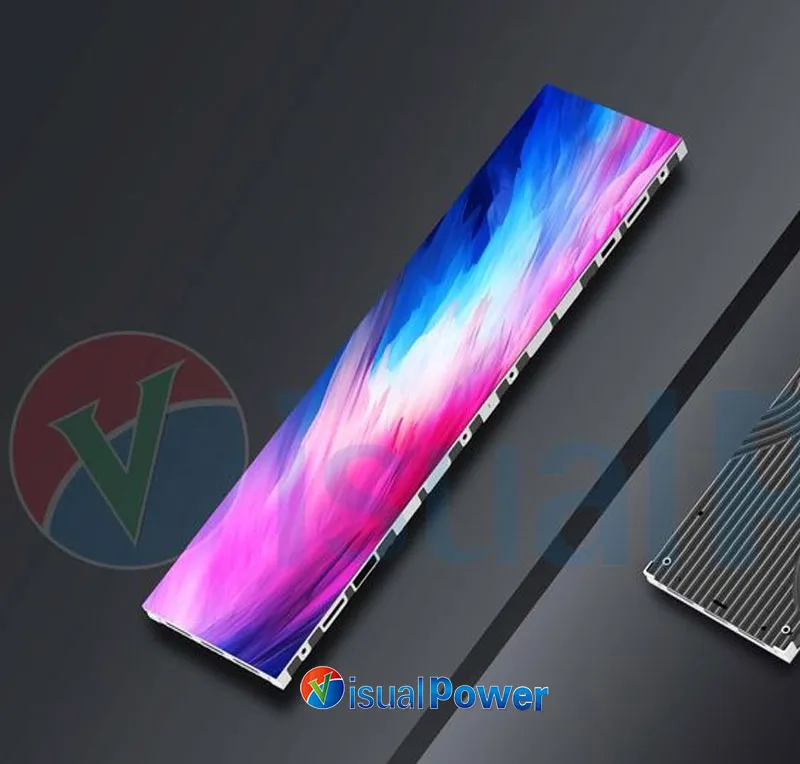
For instance, once I was designing a laboratory exhibition hall where the ceiling height was less than 2.5 meters. If traditional LEDs were installed, it would visually feel cramped. However, this ultra-thin screen is only 27 millimeters thick and, when attached to the wall, almost blends in with it. I used some frameless suspended lights. Once the lights were turned on, the entire screen seemed to float off the wall, instantly elevating the overall quality.
After the customer finished looking, he only said one sentence: “Does it look like the nano-devices we are currently working on?”
I didn’t say anything, but I just smiled to myself: You guys are in nanotechnology, and I’m working with LEDs. Isn’t this the thinnest thing you’ve got?
There was one time I almost messed things up
Of course, I’ve also shot myself in the foot. Once when I was installing, I didn’t calculate the distribution power accurately. As a result, a voltage alarm appeared on the screen as soon as it was powered on. It was the intelligent power monitoring of the V3 Pro that saved me – it can monitor the power load in real time, and the system will actively turn off some modules to prevent burning. We temporarily added a set of power supply, and the entire screen lit back up like nothing ever happened.
At that moment, I truly realized that this thing is not only beautiful on the outside, but it’s got real guts under the hood.
The final conclusion, for those colleagues still in doubt
If you ask me to summarize this type of ultra-thin LED in one sentence, my answer would be:
It’s not a matter of whether you can use it or not, but whether you can still do without it.
In our line of work, whether it’s about creating spaces, experiences or displays, we are all chasing after one thing – leaving an impression without a trace. Traditional screens are too rigid, too solid, too conspicuous and too “honest”; but this ultra-slim screen is like the best design language – it doesn’t speak, but it makes you think more.
As for the V3 Pro, I can only say that it’s not the kind of “light and flimsy” glass screen you might expect. It’s really tough, durable and detailed. It’s a reliable partner you can count on.
So, if you’re working on a spatial project next time and are still hesitant about whether to use this ultra-thin LED or not, just think back to a time when a screen caught your eye – but you didn’t even realize it was a screen.
If so, then you already have the answer.



 The LED Displays Everyone’s Asking About in 2026 (And Where They Work Best)
 Hexagon LED Display: How Geometric Screens Are Transforming Modern Exhibitions
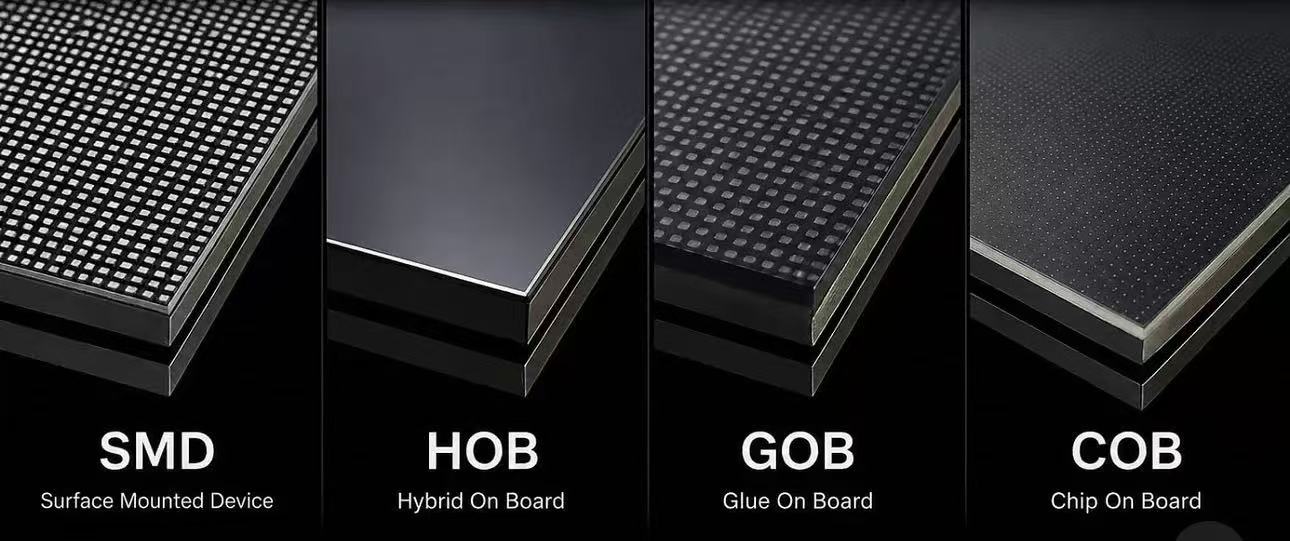 Difference of SMD GOB HOB COB LED display module
 Why Museums Are Turning to Fine Pitch LED Displays for Better Visitor Engagement
 Sphere LED Display Industry Truths: Cost, Content, and Design Risks Explained

 Sales Manager