Before I had a deep understanding of sphere LED displays, I always thought it was just a simple matter of “making the screen into a spherical shape”. It wasn’t until a few years ago, when I stood beneath a three-meter-diameter spherical LED display at an overseas exhibition and was completely surrounded by it, that I realized: This was not a screen; it was the space itself “speaking”.
That experience changed my perception of LED displays and also led me to systematically study the structure, applications and future trends of spherical LED screens. Today, I would like to organize the observations and experiences I have accumulated over the years and share them with those who truly want to understand sphere LED displays, rather than just remaining at the conceptual level.
What Is a Sphere LED Display? What makes it unique?
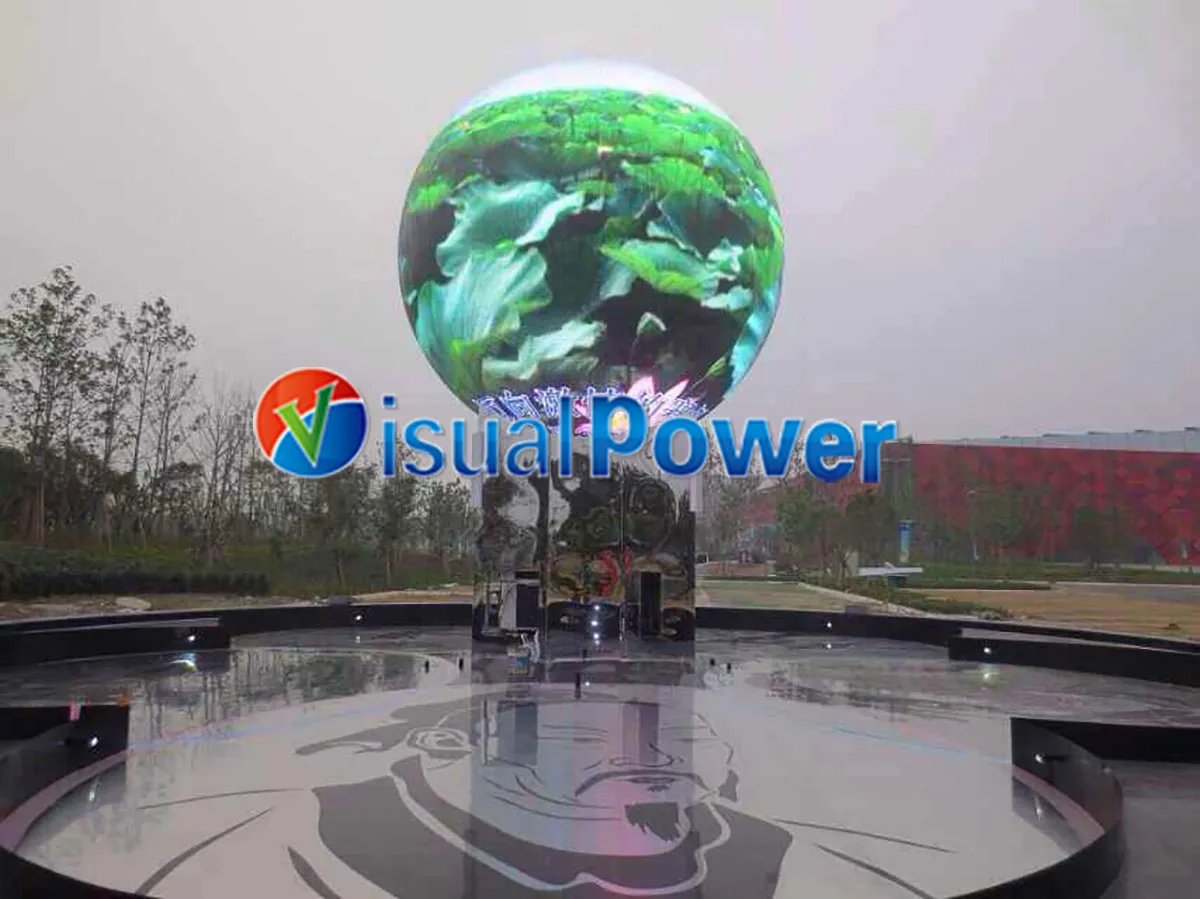
Technically speaking, a sphere LED display is a three-dimensional spherical display system composed of flexible or customized modules. However, if you only understand it based on this definition, it is essentially incomprehensible.
In my opinion, its core value lies not in the “spherical” aspect, but in the sense of immersion and the visual narrative capabilities.
Traditional flat screens, no matter how large they are, are essentially “output in one direction”; while spherical LED displays are rare display carriers that can achieve 360° unobstructed information transmission. Viewers are not “watching the screen”, but entering a visual field enveloped by the content.
This is why the sphere LED display is often seen in:
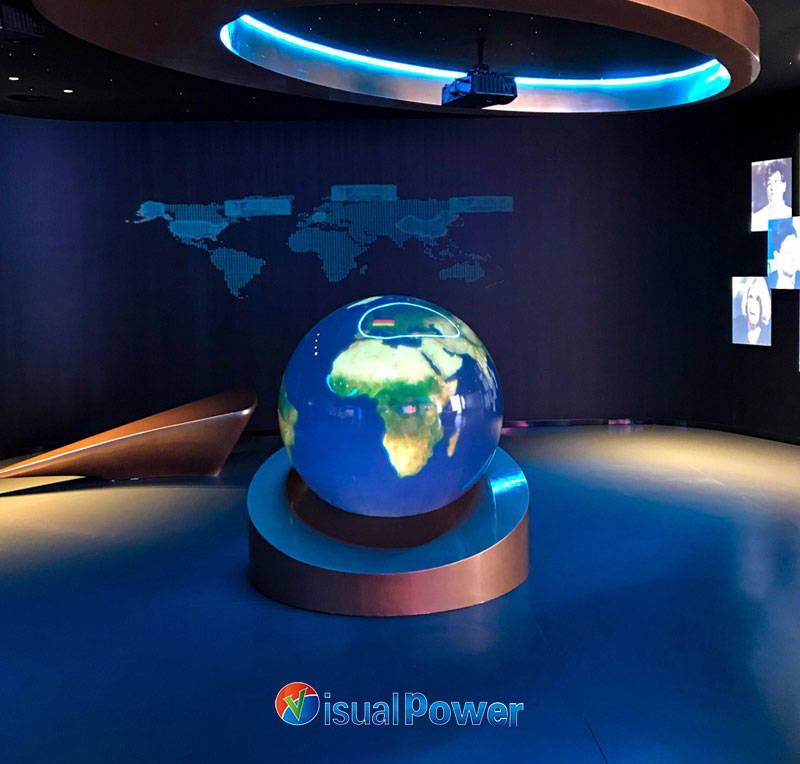
Science and technology museums and historical museums
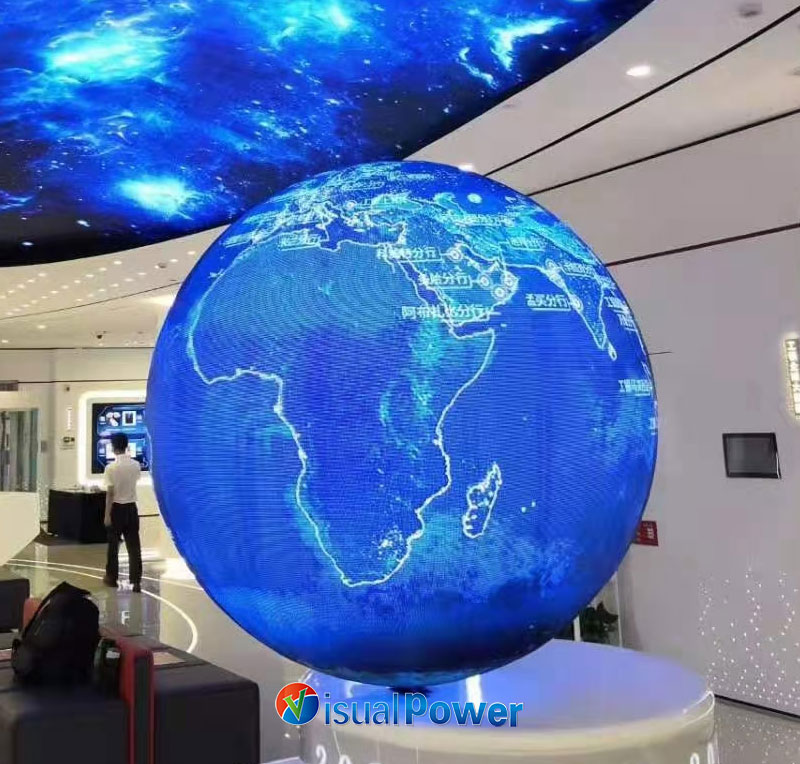
The atrium of a high-end commercial complex
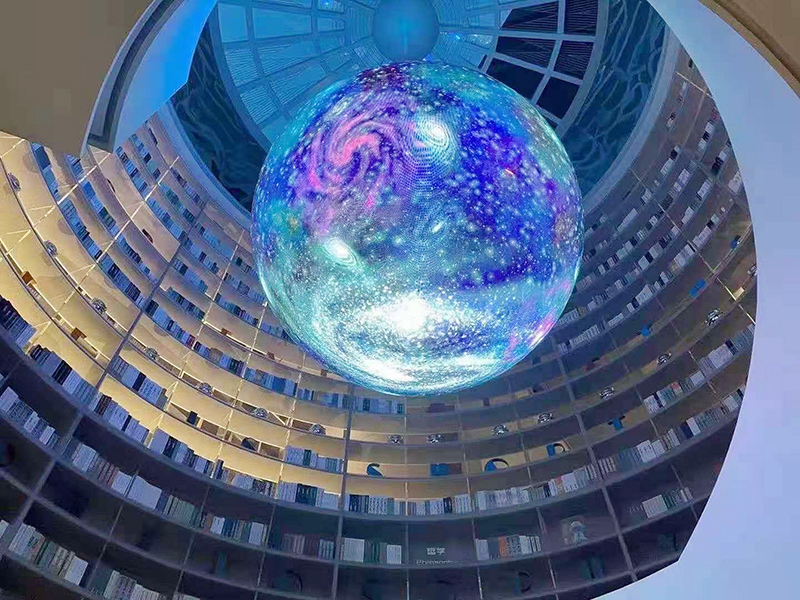
Immersive exhibitions and brand spaces
Data visualization and urban planning presentation
It was not designed to play ordinary advertisements; rather, it was created to tell stories.
The technical challenges of spherical LED displays are far more numerous than you might think.
Many people outside the industry would ask me, “All you have to do is bend the LED module a little bit, right?”
If it were that simple, sphere LED displays would have become far more common long ago.
1.The complexity of the module structure
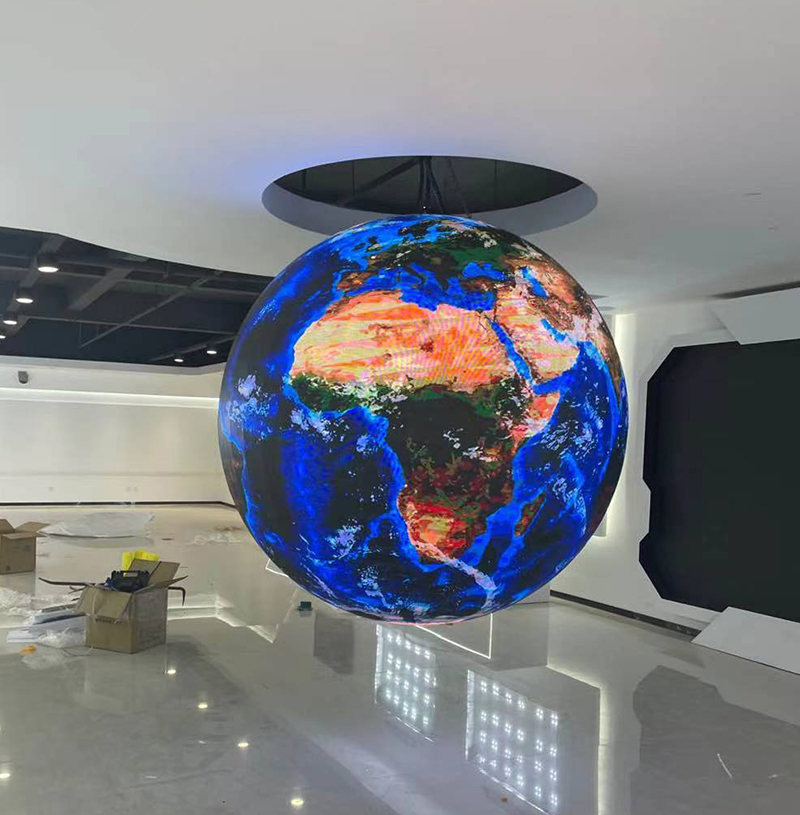
A sphere means that the curvature at every angle is changing. To ensure that the image does not deform, the module size, pixel pitch, and alignment angle all need to be highly customized. Even a slight deviation will cause the image to show obvious stretching.
2. Logical reconfiguration of the control system
The spherical screen cannot simply be “transformed into a rectangle” to function. Content mapping, signal partitioning, and synchronous refreshing all require specialized algorithms for support. I have seen many projects where the hardware was fine, but the final effect was ruined by the control system.
3. Experience barriers in installation and calibration
This is the aspect that is most often underestimated. The installation of the sphere LED display is not a one-time task; it is a continuous process of fine-tuning. Issues such as brightness consistency, color uniformity, and seam handling each require a test of experience.
This is why I have always believed that spherical LED displays are not standardized products, but rather a system engineering project.
Why are Sphere LED Displays becoming more and more common?
If you have paid attention to international exhibitions, technology centers or newly-built commercial spaces in the past two or three years, you will notice that the appearance frequency of sphere LED displays has significantly increased.
The reasons are actually quite practical.
First, people are beginning to feel tired of “flat information”.
In an era dominated by mobile phones, advertising screens and computers, flat displays have become difficult to create “memorable points”. However, spherical LED displays inherently have “visual contrast”, and even with simple content, they are sufficient to capture attention.
Second, content creation capabilities are catching up with hardware.
Previously, many spherical screens had “amazing hardware but awkward content”. But now, with the advancements in 3D engines, real-time rendering and data visualization, the sphere LED display has truly found its application potential.
Thirdly, the concept of spatial value has been redefined.
In commercial and public space design, display devices are no longer merely “appendages”, but have become an integral part of the space experience. The spherical screen lies precisely between the “art installation” and the “media carrier”.
The most successful Sphere LED Display projects I have come across all have one thing in common.
Over the years, I have witnessed many spherical LED display projects, both successful and unsuccessful. In summary, the projects that truly impressed me almost all shared one common feature:
They do not exist merely for the purpose of showing off their skills.
Once, I was involved in observing a city planning exhibition project. The spherical screen did not feature any complex special effects. Instead, it used an extremely restrained approach to “wrap” the data of urban traffic flow, population density and environmental conditions around the surface of the sphere. The audience only needed to walk around the sphere once to intuitively grasp the operation logic of the entire city.
At that moment, for the first time, I felt that: the sphere LED display was not intended to be “shocking”, but to be “understandable”.
Is the Sphere LED Display suitable for you? A practical criterion for judgment
I am often asked: “Is a spherical LED display suitable for our project?”
My response is usually not “yes” or “no”, but rather it poses three questions in a rhetorical manner:
Does your message need to be understood from multiple perspectives?
Is your space designed to allow viewers to stay and move around?
Is your content worthy of being presented in an immersive way?
If more than two out of these three questions are answered negatively, then the sphere LED display is likely not the best solution.
A Brief Note on Visualpower
During my research on sphere LED display, I referred to many technical materials and case analyses. Once, while I was looking into the structure plan of the spherical LED display, I happened to come across some presentation ideas from Visualpower.
What attracts me is not a specific project, but the way they understand “the relationship between display and space”. That perspective, which leans towards engineering logic yet doesn’t stray too far from the application context, has helped me avoid many detours in my subsequent analysis.
I have always believed that to determine whether an industry participant is professional, it is not about how many impressive words they utter, but rather whether they truly understand the complexity of the usage scenarios.
If you only remember one sentence from this article of mine, then I hope it will be this one:
The spherical LED display is not a display device; rather, it is a container for content.
Even the most advanced hardware, if it merely plays ordinary videos in a loop, will ultimately just become an expensive decoration. However, when the content is truly designed around the “spherical” feature, it can truly unleash its value.
Final Note
I wrote this article not to persuade anyone to definitely choose the sphere LED display, but to hope that when you encounter this form, you can have one more layer of understanding than the majority of people.
If one day, you stand in front of a spherical LED display and no longer merely focus on “is it clear” or “is it bright”, but start to ponder why it is placed here and what it intends to convey, then it indicates that you have truly understood it.
And this is precisely what attracted me to it in the first place.



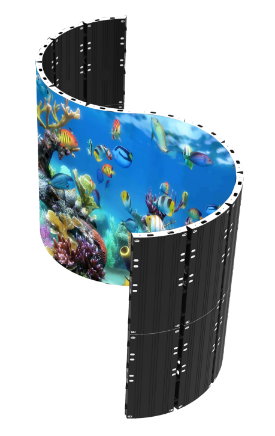 The LED Displays Everyone’s Asking About in 2026 (And Where They Work Best)
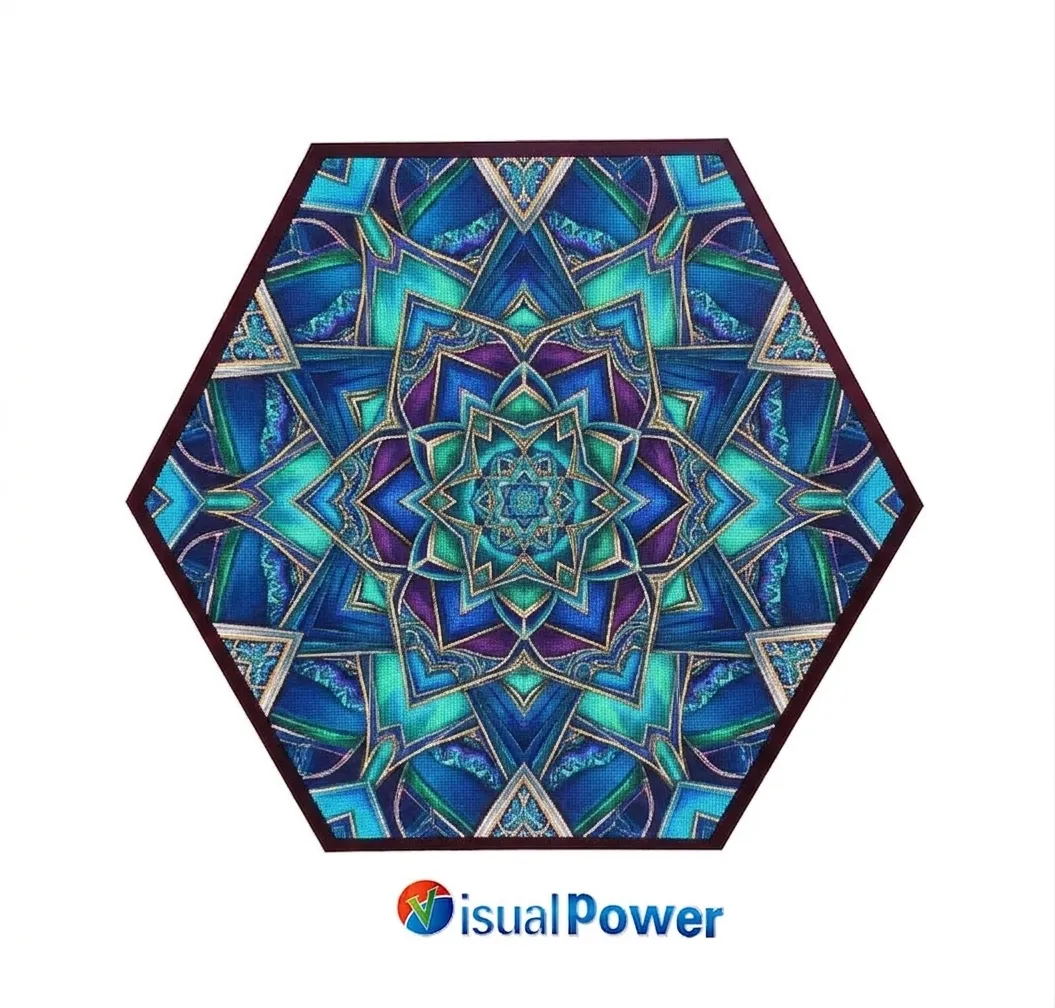 Hexagon LED Display: How Geometric Screens Are Transforming Modern Exhibitions
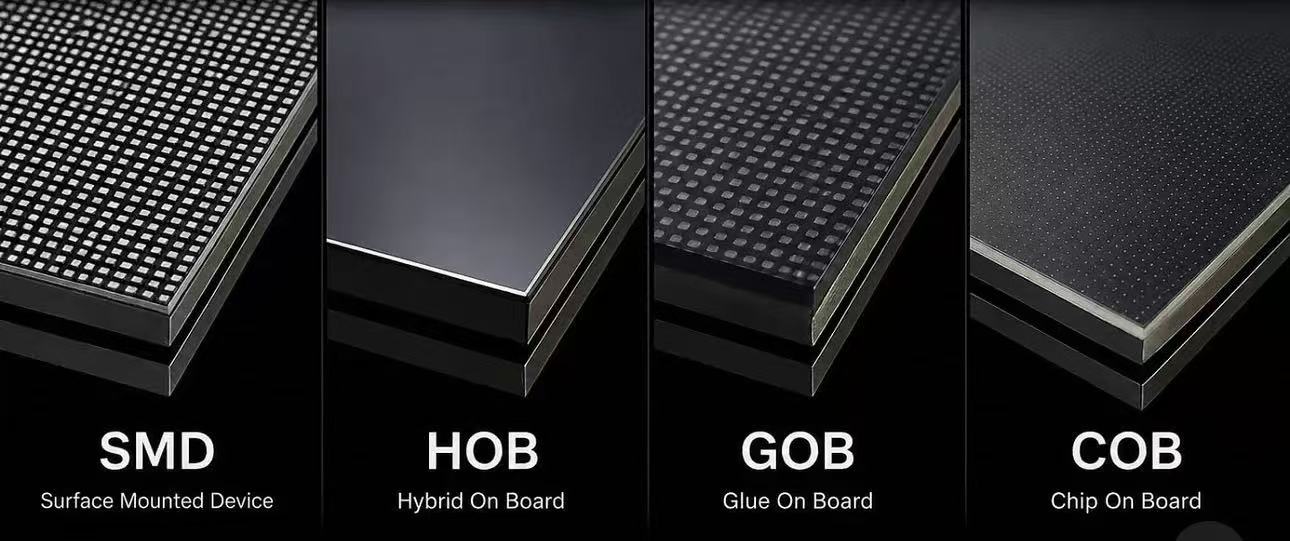 Difference of SMD GOB HOB COB LED display module
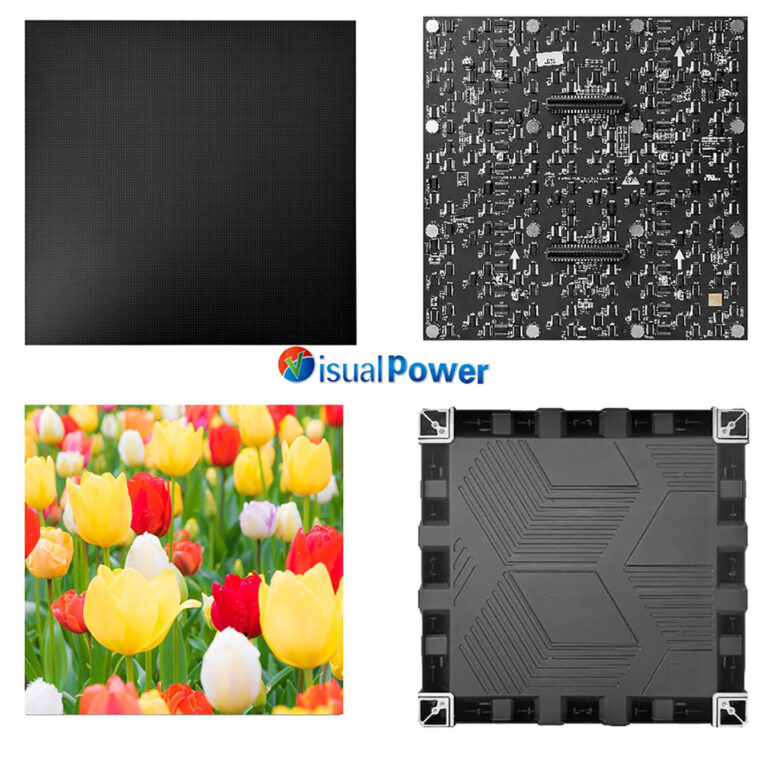 Why Museums Are Turning to Fine Pitch LED Displays for Better Visitor Engagement
 Sphere LED Display Industry Truths: Cost, Content, and Design Risks Explained

 Sales Manager